









 0
0
 0
0
www.alliance2k.org – When Jalopnik explains obscure engine parts, car enthusiasts tend to listen, yet piston skirts still remain mysterious for many readers. Most people know they exist somewhere on the piston, coated in oil and carbon, but few can clearly describe their real job. That small ignorance hides some of the most elegant engineering work inside your engine bay.
This guide takes the idea of “Jalopnik explains” and pushes it further, translating tech-speak into plain language without losing the precision gearheads love. We will explore what piston skirts do, why their shape matters, how modern coatings changed engine design, and whether any of this should influence your next build or purchase.
Jalopnik Explains What A Piston Skirt Really Is
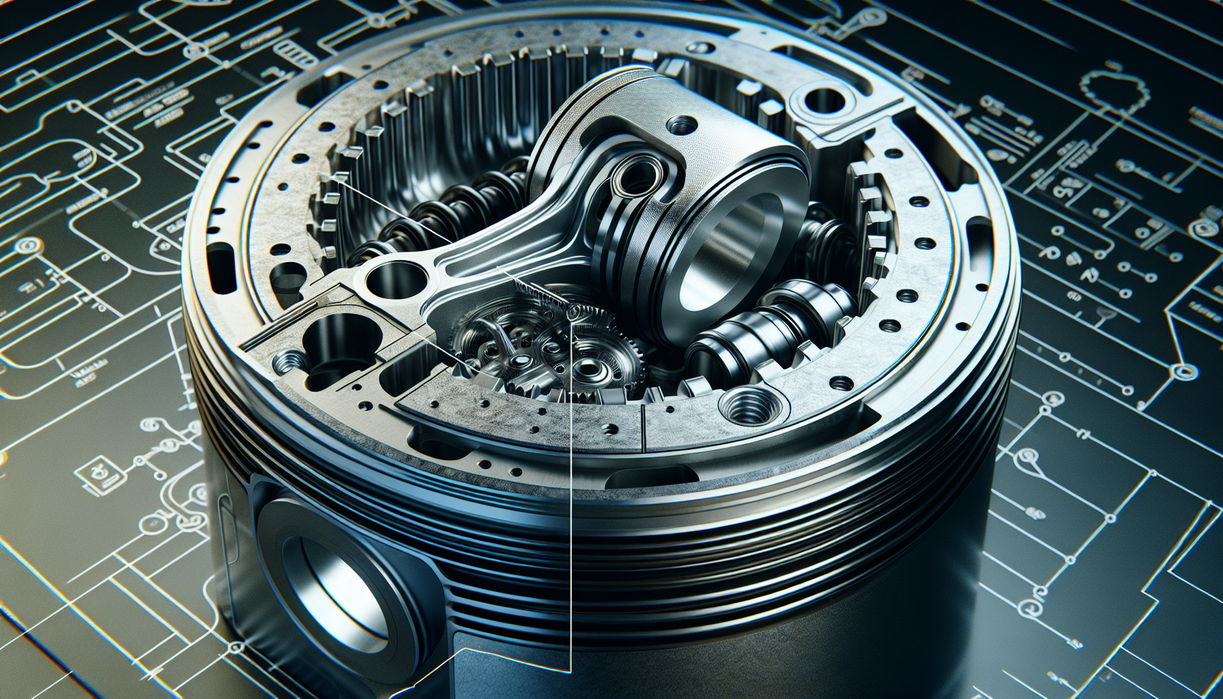
Start with the piston itself. Picture a short metal cylinder moving up and down inside the engine block. The top surface handles combustion forces. The lower section, wrapped around the side, is the piston skirt. When Jalopnik explains this part, they usually describe it as the guiding surface, because it keeps the piston aligned inside the cylinder bore with minimal friction.
Because the connecting rod does not move in a straight line, the piston wants to tilt slightly each stroke. The piston skirt provides a sliding surface to control that tilt. Without it, the piston crown would dig into the cylinder wall. That would shred the bore, scuff the piston, and quickly destroy compression. So, the skirt quietly prevents chaos every time you start the engine.
When Jalopnik explains the skirt’s role, they focus on stability more than strength. Combustion pressure pushes mostly on the crown. Side loads from the connecting rod press into the skirt area. Engineers shape the skirt to handle those side forces while avoiding unwanted drag. In other words, the skirt keeps the piston locked on course without acting like a brake.
How Jalopnik Explains Skirt Shapes, Sizes, And Noise
Look closely at modern pistons, and you immediately notice the skirt no longer wraps fully around the circumference. Many designs use a slipper-style skirt, where material only covers two opposite sides. When Jalopnik explains this design shift, they usually highlight weight reduction and lower friction. Less metal means lighter reciprocating mass, allowing higher revs and quicker response.
Skirt shape also changes how an engine sounds. Excessive clearance between skirt and cylinder wall leads to piston slap, a sharp knocking noise heard during cold starts. Jalopnik explains this as the piston rocking slightly until heat expansion tightens the fit. Tuners often tolerate a small amount of slap with forged pistons, due to their expansion characteristics, though most daily drivers prefer silence over race-ready tolerances.
Engineers counter that rocking with carefully profiled skirts. Many pistons are not perfectly round when cold. Instead, they use oval or barrel shapes, designed to become correctly sized once at operating temperature. When Jalopnik explains this detail, they emphasize that the odd geometry is deliberate, built to balance noise, reliability, and mechanical efficiency.
Why Jalopnik Explains Skirt Coatings And Modern Materials
Early engines relied on bare aluminum or simple alloys for skirt surfaces. Friction levels were higher, and scuffing occurred more easily when oil films failed. Modern pistons often wear dark, graphite-like coatings on the skirt. Jalopnik explains these coatings as sacrificial layers that reduce friction during start-up, before full oil pressure arrives. They also help protect against brief lubrication failures. From my perspective, these coatings represent a quiet revolution similar to synthetic oils: unseen, often unappreciated, yet critical for longevity in downsized, high-output engines.