









 0
0
 0
0
www.alliance2k.org – AI news rarely unites America, yet fresh survey data shows Democrats and Republicans suddenly share the same uneasy feeling. Across the political spectrum, people sense that artificial intelligence is racing ahead of the safeguards meant to keep it in check. Concerns over sprawling data centers, disappearing jobs, and eroding privacy now cut through partisan noise, creating a rare corridor of agreement.
This new AI news from Pew Research hints at something deeper than a passing tech scare. It reveals a public that feels impressed and threatened at the same time. Citizens see AI shaping headlines, workplaces, and elections, while rules remain vague. For once, the question is not left versus right. It is people versus runaway systems they barely understand.
Shared Anxiety in the Latest AI News
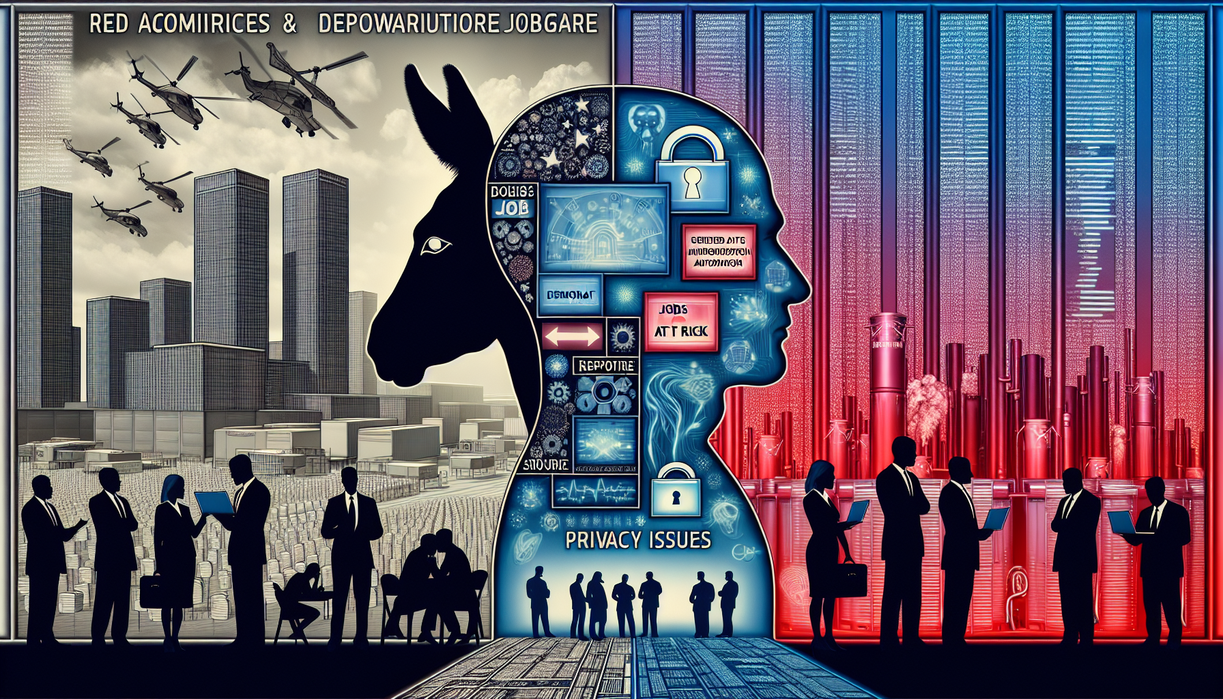
The latest AI news from Pew points to a striking symmetry. Roughly half of Democrats and Republicans say they feel more worried than hopeful about artificial intelligence. This mirrors a broader mood of digital fatigue. Many individuals once welcomed automation as a path to convenience, yet now see a powerful tool reshaping life faster than society can adapt. Hope has not vanished, but it now coexists with deep suspicion.
Part of this shift comes from the visibility of AI in daily life. Generative tools write emails, draw images, and mimic human voices with unsettling precision. Voters watch realistic deepfakes spread online, while students debate whether using AI on homework is cheating or simply modern research. When AI news turns into lived experience, abstract debates become concrete fears.
Another element behind this shared anxiety is the sense of lost agency. People feel the technology is decided for them, not with them. Corporate announcements arrive, new systems appear at work, and policies follow slowly. That pattern erodes trust. If the public sees AI as something imposed from above, skepticism will grow, regardless of party identity or ideology.
Data Centers, Jobs, and Privacy Under the Spotlight
One recurring theme in recent AI news is the physical footprint of data centers. These facilities demand massive energy and water resources to keep servers running and cool. Communities worry about stress on local grids, higher utility bills, and environmental impact. For residents in small towns hosting new sites, the promise of investment starts to clash with questions about sustainability and resilience.
Economic unease sits close behind. Workers across industries sense the ground shifting under their feet. AI systems now draft legal memos, analyze medical scans, handle customer service, and even write basic code. While history shows technology can create fresh roles, it rarely helps those displaced in the short term. Many fear a transition where high‑skill positions expand, routine roles vanish, and support for retraining falls short.
Privacy anxiety adds a more personal edge to the conversation. AI improves when fed enormous amounts of data. That often means tracking clicks, purchases, locations, and even facial expressions. People read AI news about surveillance tools, predictive policing, and emotion recognition in workplaces. They wonder who owns their digital traces, how long those traces stay stored, and what happens when profiling goes wrong or biases remain hidden.
Why This AI News Could Reshape Politics
This emerging bipartisan concern, highlighted in AI news, could become one of the most important political forces of the decade. When voters from both sides express similar fears, candidates must respond with policies that rise above slogans. Thoughtful rules around transparency, data rights, worker protections, and environmental standards could become a new center of gravity. My view is that the real battle will not be over whether AI should exist, but over who controls its benefits and who absorbs its risks. If leaders treat public concern as a warning instead of an obstacle, this rare moment of agreement might produce smarter governance rather than another missed opportunity.
The Promise Tied to Widespread Concern
Yet the same AI news that highlights anxiety also reveals substantial optimism. Many people still believe AI can cure diseases faster, personalize education, and streamline government services. In health care, models can scan images for early signs of cancer that human eyes might miss. In climate science, AI helps sift through vast datasets to refine predictions and identify cleaner energy strategies. These possibilities keep hope alive, even as doubts multiply.
Education may be one of the most promising frontiers. Intelligent tutors can adapt explanations to each student’s pace, language level, and learning style. For communities with underfunded schools or limited teacher access, this could narrow achievement gaps. But that outcome depends on careful design. If AI tools mainly serve affluent districts, the technology could widen inequality instead of closing it. The hopeful scenario requires deliberate planning, not wishful thinking.
Public services offer another area where optimism meets caution. Imagine faster processing for benefits, clearer tax assistance, and safer infrastructure through predictive maintenance. That vision often appears in upbeat AI news releases. However, automated decision systems can lock in bias or deny services by mistake, with little recourse for appeal. The real challenge lies in combining efficiency with accountability so that algorithms support humans instead of quietly overruling them.
Bridging the Gap Between Fear and Opportunity
The core message behind the latest AI news is not simply that people are scared. It is that they feel left out of the conversation. Technical discussions still rely on jargon, while real‑world consequences land on everyday workers, renters, patients, and voters. Bridging this gap requires plain language, public hearings, and tools that let communities understand what systems do and how they can push back when something feels unfair.
My perspective is that civic literacy about AI is now as essential as basic financial literacy. Citizens should not need a computer science degree to grasp how data is collected, what training models involve, and where algorithmic decisions appear. Schools, libraries, unions, and local governments could offer simple workshops that break down AI news into practical guidance. Informed communities negotiate better deals and demand stronger protections.
There is also room for collaboration across ideological lines. Environmental advocates worry about data center emissions; business groups crave stable rules; civil liberties organizations defend privacy and free expression. Each group approaches AI from distinct interests, yet their underlying concerns often align. If they treat each other as partners instead of rivals, shared advocacy could push leaders toward more balanced, durable policy frameworks.
Reflecting on a Turning Point in AI News
At its heart, this moment in AI news feels like a crossroads. The technology will advance regardless of political debates, but public trust is not guaranteed. Democrats and Republicans rarely agree so clearly on a complex issue, which makes this convergence worth respecting. If we ignore the worries, resentment will deepen as systems grow more powerful. If we listen, we can design guardrails that keep human values ahead of pure efficiency. The choice is collective: treat AI as an inevitable storm to endure, or as a set of tools we shape through participation, skepticism, and imagination. Either way, the story we write now will echo long after today’s headlines fade.