








 0
0
 0
0
www.alliance2k.org – The next-generation spacesuit is quietly rewriting the rules of how humans will walk, work, and explore on the Moon. As NASA prepares the Artemis II mission to loop around our lunar neighbor, Axiom Space is refining its AxEMU suit for Artemis III’s targeted 2027 landing. This advanced spacesuit does more than protect astronauts; it restores a sense of natural motion that earlier designs restricted.
For decades, the iconic bulky lunar spacesuit symbolized exploration, but also limitation. Now, engineers pursue a new balance between safety, flexibility, and usability. The AxEMU concept seeks to turn the spacesuit from a stiff shell into a mobile personal spacecraft tailored to the human body. That shift could redefine what crews achieve on the Moon’s rugged surface.
A Spacesuit Built for a New Lunar Era
The modern lunar spacesuit emerges from hard lessons learned during Apollo. Astronauts then struggled with stiff joints, awkward hopping gaits, and exhausting workloads. Those early suits did their job superbly, yet they were never meant for long-term surface operations or complex construction tasks. Artemis aims to stay longer, venture farther, and test technologies for Mars. That vision demands a new approach to spacesuit design.
Axiom Space’s AxEMU concept centers on mobility first. Instead of accepting the famous lunar shuffle, designers want astronauts to walk with a stride closer to natural motion. Joints at the hips, knees, and ankles use improved bearings and materials, which reduce resistance when bending or twisting. This refinement sounds simple, yet on the Moon it can make the difference between a short field trip and an extended geological survey.
Another crucial shift involves fit and adjustability. Earlier suits often required heavy customization for each astronaut. The new spacesuit platform embraces modular components sized for different body types. With this modular strategy, mission planners can equip more diverse crews without rebuilding each suit from scratch. That inclusivity carries real operational benefits, because a wider pool of astronauts brings more varied skills to the surface.
Engineering Freedom of Movement
Every spacesuit must solve the same core problem: it acts as a tiny pressurized habitat wrapped around a fragile human. Once you pressurize a garment, it tends to balloon and resist bending. The AxEMU tackles this through sophisticated joint architecture. Bearings, layered fabrics, and clever seam placement help keep the suit flexible when pressurized. The objective is clear: allow astronauts to kneel, climb, carry tools, and handle samples with less fatigue.
Gloves remain one of the hardest challenges. Any spacesuit glove needs to protect from vacuum, sharp dust grains, and temperature swings, yet still allow delicate hand work. Engineers are exploring improved materials, joint patterns, and fingertip designs that reduce strain. Better gloves could let crew members manipulate scientific instruments, set up antennas, or assemble structures without constant hand pain. Over a long mission, that comfort translates into real productivity.
Life-support integration provides another arena for innovation. The backpack on a spacesuit holds oxygen, cooling hardware, power, and communication systems. For Artemis, designers aim to pack more capability into smaller, lighter units. Enhanced telemetry will send suit performance data back to controllers in near real time. From my perspective, this data-rich approach transforms the suit into a monitored system rather than a black box. That transparency allows teams to detect issues early and tune procedures around actual performance, not just predictions.
Facing Lunar Dust and Harsh Extremes
No discussion of a lunar spacesuit is complete without addressing dust. The Moon’s fine, abrasive grains cling to almost everything and can damage seals, joints, and fabrics. They also pose health risks if inhaled inside a habitat. Modern suits must stand up to this relentless grit. New outer layers aim to resist abrasion while shedding dust more easily. Seals and bearings receive additional shielding from contaminants. The stakes go beyond comfort; a compromised joint could spell the end of an excursion. My own view is that dust mitigation will determine whether surface operations remain sustainable. If designers succeed, crews will spend less time cleaning gear and more time conducting science and building infrastructure.
From Apollo Footprints to Artemis Worksites
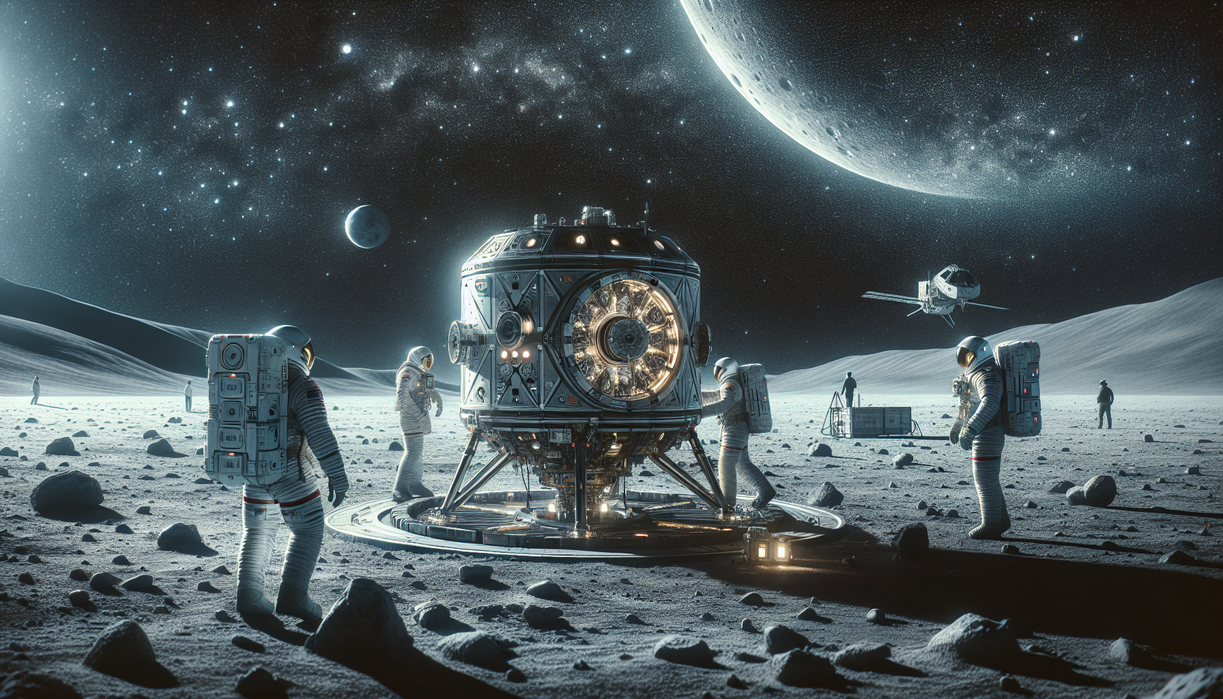
The image of boot prints in lunar soil still inspires, yet Artemis goals extend beyond symbolic footprints. Upcoming missions aim to map resources, test power systems, and assemble hardware that could support permanent outposts. A spacesuit suited to these tasks must enable repetitive, everyday labor, not just short exploration sorties. Think of it less as a ceremonial garment and more as rugged workwear for extreme environments.
One key improvement involves stability on slopes and rough ground. Apollo footage reveals astronauts stumbling, bouncing, and sometimes falling as they adjusted to low gravity inside rigid suits. With AxEMU enhancements, crews should manage hillsides and crater rims with more confidence. Improved ankle motion, better traction on boots, and fine-tuned weight distribution all support safer movement. From a risk standpoint, fewer trips and falls mean fewer chances for injuries or suit damage.
Mobility also supports scientific depth. When geologists can traverse longer distances in one excursion, they access more diverse rock formations and stratigraphic layers. That variety unlocks better clues about lunar history. A more capable spacesuit therefore becomes an enabling technology for science, not merely a protective envelope. The more freely astronauts can move, the richer the story they can gather from the Moon’s ancient surface.
Collaboration Between NASA and Industry
The AxEMU spacesuit represents a collaboration between NASA and private industry rather than a purely governmental project. NASA provides decades of experience, requirements, and safety standards, while Axiom Space contributes agile design cycles and manufacturing capabilities. This partnership model reflects a broader shift across spaceflight. Hardware once owned entirely by government agencies now emerges from a mix of public and commercial expertise.
From my perspective, this shared approach carries both advantages and challenges. On the positive side, commercial partners can often iterate faster, test new concepts quickly, and drive costs down over time. They also bring competitive pressure that encourages innovation. However, integrating commercial pace with NASA’s rigorous safety culture requires careful coordination. A spacesuit failure on the Moon leaves no margin for error. Balancing innovation with reliability becomes essential.
Still, the trend seems clear. As more participants enter the space sector, specialized companies will supply components such as habitats, rovers, and suits. This ecosystem could eventually serve not only government missions but also private expeditions or research ventures. A robust lunar spacesuit platform might find customers far beyond the first Artemis crews, perhaps supporting mining studies, tourism, or international collaborations on the surface.
Testing on Earth for Life Off Earth
Before any spacesuit touches lunar soil, it must endure a brutal sequence of tests here on Earth. Vacuum chambers simulate the near-emptiness of space, while thermal facilities swing between blistering heat and bitter cold. Drop tests, bend tests, and treadmill evaluations reveal weaknesses in joints or fabrics. Astronauts practice in full gear, often inside neutral buoyancy pools, to mimic reduced gravity. I see these rehearsals as more than technical validation. They also shape the human-suit relationship. Crews learn how each component responds, where motion feels constrained, and how to adjust their techniques. Feedback from these sessions feeds directly back into design tweaks. It is an iterative loop where human experience guides engineering refinement.
Looking Beyond the Moon
Although the AxEMU spacesuit focuses on lunar missions, many choices made today anticipate journeys to Mars. Gravity on Mars is higher than on the Moon yet still far below Earth’s. Surface conditions include dust storms, varying temperatures, and long-duration stays. Technologies that improve mobility, dust resistance, and life support on the Moon will inform future Martian suits. In this sense, Artemis acts as a proving ground for the next frontier.
The psychological side of exploration also matters. A spacesuit that allows more natural motion can help astronauts feel less confined and more capable. That perception influences performance, mood, and resilience. Spending weeks or months on another world will test mental endurance as much as physical strength. Comfortable, responsive gear becomes part of that resilience toolkit. I believe future mission planners will weigh this factor more heavily as stays grow longer.
There is also a symbolic dimension. When the first woman and the next man step onto the Moon under Artemis, their spacesuit will communicate a message about modern exploration. A more inclusive, adaptable design reflects a broader vision of who belongs in space. The suit becomes a public emblem of collaboration, diversity, and technological progress, not just a piece of hardware. That symbolism, while intangible, shapes the narrative around human expansion into the solar system.
My Take on the New Lunar Spacesuit
From my perspective, the most transformative aspect of the new spacesuit is not any single feature but the overall shift in philosophy. Past suits were often heroic but rigid tools built for short missions. The AxEMU treats surface operations as sustained work rather than brief excursions. It accepts that astronauts must carry heavy loads, repair equipment, and perform repetitive tasks, all while staying alert to hazards. This work-focused mindset aligns better with long-term habitation goals.
I am particularly intrigued by the data-centric approach to suit health monitoring. Continuous telemetry can reveal subtle patterns, such as increasing strain on a joint or gradually rising internal temperature over successive excursions. Those patterns may inform when to schedule maintenance, rotate suits between crew members, or adjust workloads. In harsh environments, predictive insight becomes a powerful safeguard.
Yet challenges remain. Every additional feature introduces complexity, which can fail at the worst time. Designers must balance sophistication with rugged simplicity. Astronauts often prefer equipment that is straightforward to repair in the field. For that reason, I expect future iterations of the spacesuit to evolve gradually, layering in new capabilities only after earlier ones prove reliable under real mission stress.
A Reflective Future for Lunar Exploration
As the AxEMU spacesuit advances toward its first lunar outing, it represents more than just an upgrade over Apollo hardware. It reflects a maturing relationship between humans and the environments beyond Earth. We are moving from quick visits to sustained presence. Each new joint, fabric, and sensor tells a story about how we intend to live and work away from home. In that sense, every stitch in the spacesuit carries a piece of our collective ambition. If we get this right, the next footprints on the Moon will not mark an endpoint. They will signal the beginning of a more enduring human chapter among the worlds that circle our Sun.