










 0
0
 0
0
www.alliance2k.org – Customer support has quietly entered a new era. Instead of waiting on hold or repeating account details to multiple agents, many customers now receive instant answers from AI systems that understand their needs and respond in real time. A recent pilot by Israeli telecom company Partner shows just how far this technology has progressed, with AI agents successfully handling half of all customer inquiries without any human intervention.
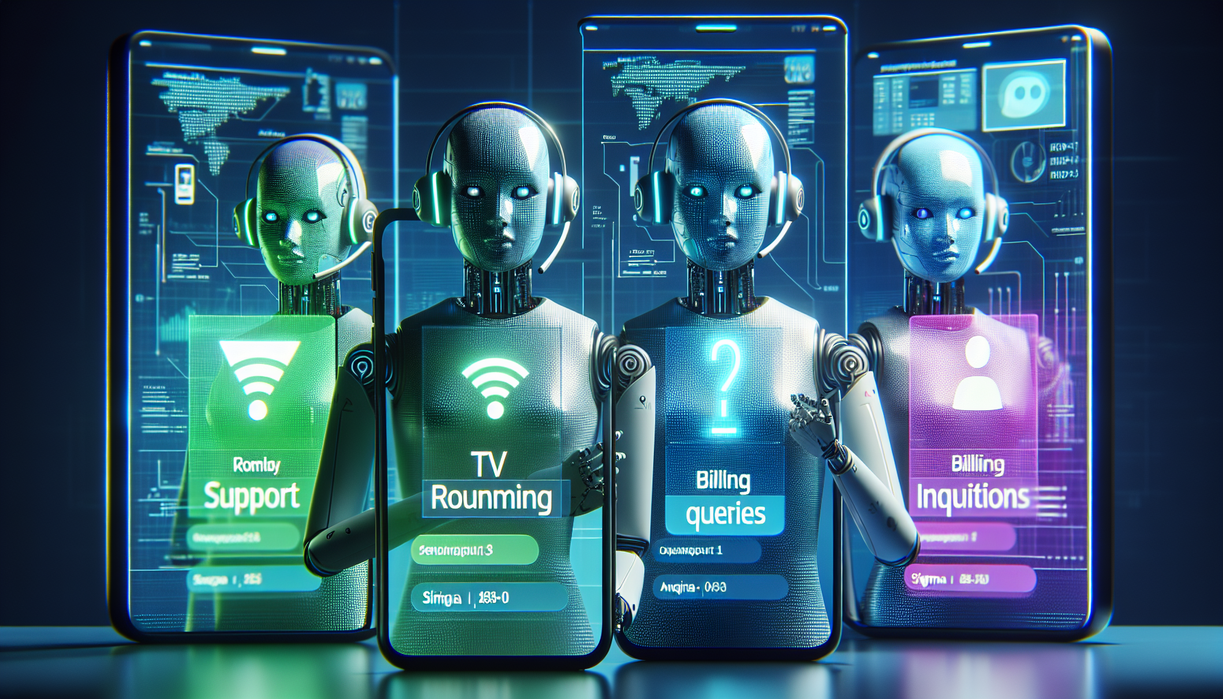
This milestone is bigger than a single telecom experiment. It signals a turning point for customer support as a whole, across industries. When virtual agents can solve billing questions, TV issues, roaming problems, and general service requests at scale, businesses are forced to rethink the role of human agents, the design of support processes, and even what customers should expect from service experiences.
How AI Is Rewriting Customer Support
Partner’s pilot demonstrates a clear shift in customer support: automation is no longer just triage or basic FAQ routing. Their AI agents engage directly with customers, understand context, ask clarifying questions, and complete tasks that once required a person at the other end of the line. Resolving half of all inquiries is not a small optimization; it is a structural change to how service operations function.
Traditionally, customer support has been built around call centers, long queues, and often stressed human staff. Even digital channels like chat or social media usually end up with a human agent typing at the other side. Partner’s AI agents, however, act as the primary interface for many customers, especially for straightforward TV, roaming, and billing issues. This releases human specialists to handle uncommon or highly emotional cases.
From a strategic perspective, that 50% automation rate is critical. It means customer support leaders can redesign workforce plans, cost structures, and service-level commitments. Instead of hiring more people to keep up with growing volume, organizations can scale AI capacity, then invest in deeper training for a smaller group of expert human agents. Customers benefit from faster responses, while staff focus on complex scenarios where empathy and judgment matter most.
What Makes AI Customer Support Actually Work
Many companies have tried automation in customer support and ended up with frustrated users trapped in rigid phone menus or useless chatbots. So why does this new generation of AI succeed where early tools failed? The answer lies in improved language models, richer data, and better integration with back-end systems. These agents do more than recognize keywords; they can interpret intent, manage context across messages, and adapt to follow-up questions.
For example, a customer who contacts support about a roaming problem may use casual language, mix several issues, or shift topics mid-conversation. Advanced AI can still keep track of the main goal, pull account details, and check network or plan settings. With proper integrations, it can then make real changes, such as adjusting a package, issuing a credit, or providing step-by-step instructions. The conversation feels less like shouting at a machine and more like chatting with a knowledgeable assistant.
Yet technology alone does not guarantee great customer support. Partner’s success implies careful design: clear escalation paths to human agents, strong guardrails to avoid incorrect actions, and continuous monitoring of quality. AI needs boundaries, feedback loops, and human oversight. When customers sense that they can always reach a person if needed, they are more willing to give automated agents a chance. Over time, as the system proves reliable, trust grows and adoption increases.
The Human Impact of Smarter Customer Support
AI-driven customer support often raises fears of job loss, but the reality is more nuanced. Partner’s pilot hints at a future where routine questions rarely reach human agents, yet human contribution becomes more meaningful. Instead of handling endless password resets or basic billing confusion, staff focus on intricate disputes, high-value accounts, or emotionally charged cases where empathy and creativity are essential. From my perspective, this shift can actually improve the human experience at work, provided companies invest in retraining, clear communication, and new career paths. As AI takes over repetitive tasks, people can grow into roles centered on problem solving, relationship building, and service innovation. The real challenge is not whether AI will transform customer support, but whether organizations will redesign teams in a way that respects workers and elevates the quality of service.
Opportunities and Risks Behind the 50% Automation Mark
Reaching a 50% automation rate in customer support unlocks several powerful opportunities. First, it enables near-instant service for a large slice of requests, which directly improves satisfaction. Customers no longer feel trapped in queues for basic questions. Second, costs per interaction can decrease without cutting quality. This makes it possible to offer support across more channels or longer hours, even for lower-margin products.
There is also a data advantage. AI agents interact with huge volumes of customer support conversations, creating a rich source of insight. Patterns in complaints, recurring friction points, and emerging product issues become visible more quickly. Leaders can act earlier to fix root causes instead of reacting to isolated incidents. In a telecom context, that might mean detecting coverage issues, confusing plan structures, or recurring TV setup problems.
However, heavy automation introduces new risks. Misunderstood requests, mistaken account changes, or poorly handled edge cases can damage trust. When an AI agent appears confident yet delivers wrong information, customers feel deceived. To avoid this, companies must define clear scenarios where automation is allowed to act, and others where it must pause and bring a human into the loop. Transparent communication helps here: users should know when they are dealing with AI and how to reach a person quickly if something feels off.
Designing Customer Support That Feels Human, Not Robotic
One of the most important lessons from Partner’s pilot is that success in AI customer support depends on experience design, not just algorithms. People want to feel heard, understood, and respected. That means paying attention to tone, pacing, and context. A good virtual agent answers quickly, but also asks clarifying questions and acknowledges frustration when needed. Short, simple sentences work better than overly formal scripts.
Language choice is crucial. AI must adapt to slang, mixed languages, and cultural nuances, especially for a telecom provider serving diverse communities. If the system insists on rigid phrasing or fails to interpret common expressions, users will quickly give up. Training on real customer support transcripts, combined with review from local experts, can dramatically improve relevance.
From my point of view, the best customer support design blends AI efficiency with human safety nets. For example, a conversation might start with a virtual agent, progress through automated troubleshooting steps, and then transition to a human who sees the full chat history. The customer does not need to repeat information, and the human agent picks up already knowing the context. This hybrid model respects the user’s time and preserves the warmth that only people can provide.
Looking Ahead: Customer Support as a Strategic Advantage
The Partner example shows that AI is not merely a cost-cutting tool; it is becoming a strategic differentiator for customer support. Companies that master this shift can offer faster, more consistent, and more proactive service than competitors. Over the next few years, I expect customers to judge brands not only by product quality or price, but by how intelligently and compassionately they handle support across channels. Those that treat AI as a partner for humans, not a replacement, will likely earn stronger loyalty. In the end, technology will keep evolving, yet the core goal stays the same: to listen carefully, solve problems effectively, and leave people feeling respected. Reflecting on this transformation, it is clear that the future of customer support will be measured less by average handle time and more by the depth of trust it creates.