




 0
0
 0
0
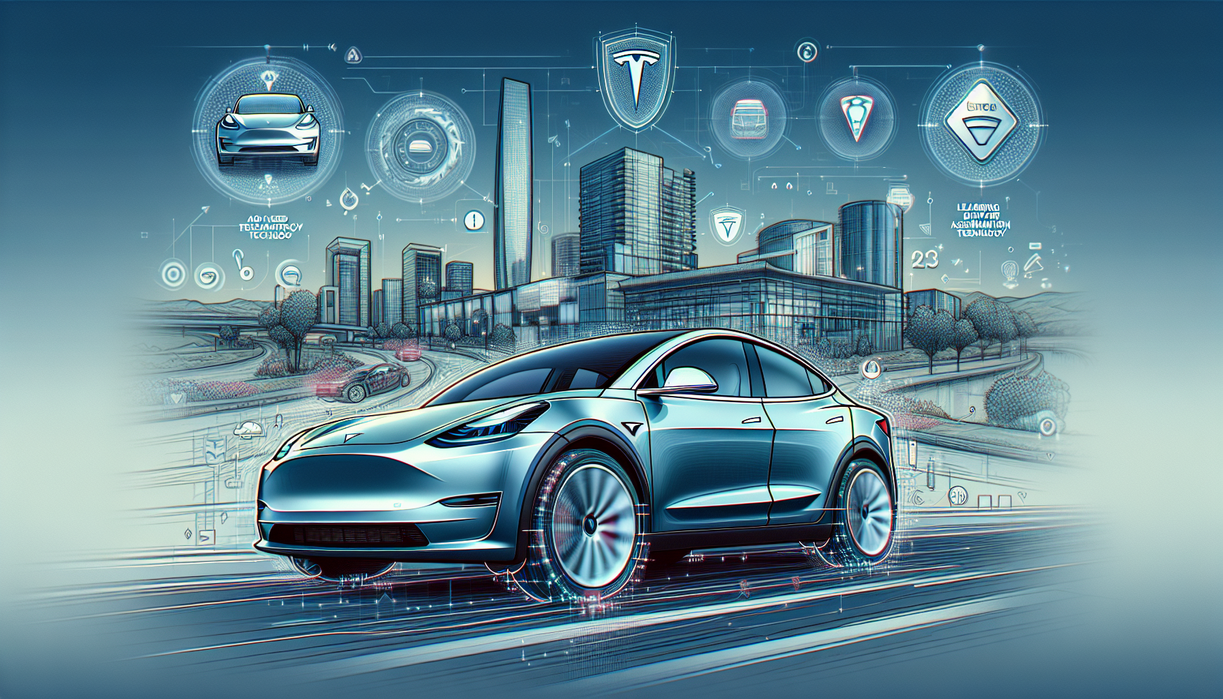
www.alliance2k.org – Tesla has once again stepped into the spotlight, this time by clearing a tougher federal safety hurdle with its Model Y. Under a revamped rating system that evaluates both crash protection and real‑world driver‑assist performance, Tesla’s popular crossover stands alone. For now, it is the single vehicle reported to meet the new benchmark, suggesting that the company’s controversial focus on software and automation is starting to pay off in measurable ways.
This milestone also highlights a growing divide across the auto industry. Many brands advertise advanced assistance systems, yet few have been forced to prove their technology under stricter, data‑driven scrutiny. As regulators upgrade standards to reflect modern driving realities, Tesla’s early lead with Model Y could pressure rivals to rethink how they design, test, and honestly market their safety features.
Tesla, Safety Metrics, and a Changing Rulebook
The updated federal rating framework no longer treats safety as a crash‑only story. Instead, regulators now factor in how well a car’s driver‑assist technology avoids collisions in the first place. Tesla has built its narrative around this philosophy for years, arguing that software updates, sensor fusion, and real‑time fleet data can cut risk before impact occurs. Model Y’s strong showing confirms that regulators now partially share that view, translating software competence into official safety recognition.
For many automakers, this shift creates a new kind of scoreboard. Legacy brands often excel at structural protection, yet lag on integrated automation. Tesla, on the other hand, has grown up as a software‑centric company that happens to make cars. That orientation becomes a strategic advantage once agencies evaluate lane keeping, forward‑collision mitigation, automated braking, and driver monitoring as core pillars of safety grades.
From a consumer perspective, this evolution is overdue. Drivers encounter hazards long before a crash occurs, so ratings should reflect prevention, not just survival. When Tesla earns top marks under a standard built around real‑world scenarios, it encourages buyers to ask tougher questions about other brands’ glossy safety claims. Are they proven under stress, or just impressive in commercials?
Inside Tesla’s Model Y Advantage
Tesla’s Model Y success starts with architecture designed for active safety. A low center of gravity, quick torque control, and rigid battery structure reduce rollover risk and improve stability. Yet the decisive edge lies in Tesla’s integrated software stack. Features such as adaptive cruise assist, lane centering, and automatic emergency braking share information from the same sensor suite, coordinated through over‑the‑air updates. When regulators run repeatable tests, that cohesion often shows up as more consistent performance.
Another factor is Tesla’s fleet learning approach. Every Model Y on the road effectively becomes a rolling data probe. Anonymized driving information flows back to the company, feeding algorithms that refine obstacle detection, braking thresholds, and steering behavior. Few competitors operate at this scale with continuous improvement in mind. In the context of the new rating system, which rewards predictable avoidance capabilities, that real‑world feedback loop provides a powerful edge.
Still, raw capability does not automatically equal safety. Tesla must balance automation with clear boundaries for drivers. Critics argue that branding like “Autopilot” or “Full Self‑Driving” can mislead users into overtrusting the system. If Tesla wants its Model Y lead to last, it needs not only high technical scores but also robust human‑factor design: alerts that keep drivers engaged, transparent limitations, and interface choices that discourage complacency instead of inviting it.
What This Means for Drivers and the Industry
Tesla’s Model Y performance under the tougher federal standard sends a message that reaches far beyond one model or one brand. For drivers, it signals that safety ratings are finally catching up with the modern car, where the most important decisions often occur through lines of code rather than crumple zones alone. For the industry, it draws a bright line: software maturity and verifiable driver‑assist behavior are now central to regulatory approval and consumer trust, not optional add‑ons. From my perspective, this is a healthy, if overdue, correction. Tesla deserves credit for setting a new bar, yet the real win will come when every automaker treats proactive crash avoidance, honest marketing, and continuous software improvement as fundamental responsibilities. Until then, the Model Y’s achievement stands both as a competitive trophy and a quiet challenge, inviting reflection on how safe mobility should really be measured in the years ahead.