






 0
0
 0
0
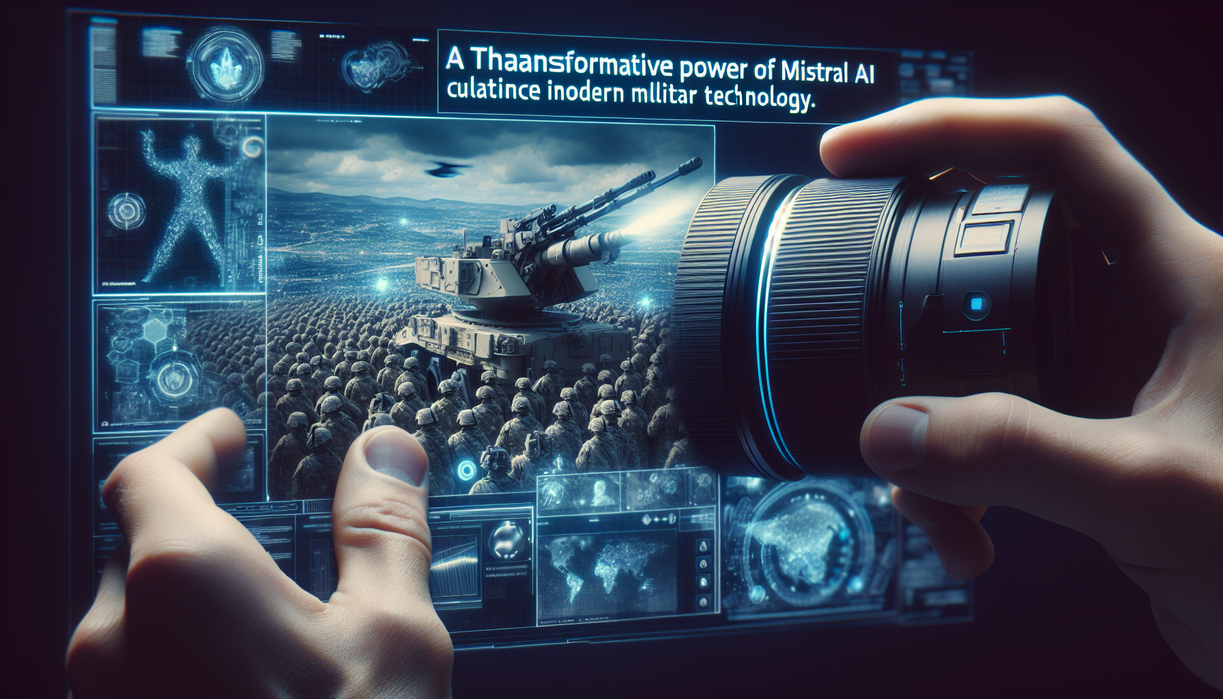
www.alliance2k.org – Mistral ai just vaulted from European startup star to strategic cornerstone of French defense. France’s Ministry of the Armed Forces has signed a landmark multiyear deal, reported near $14 billion, to embed mistral ai models across intelligence, logistics, and operational planning. This move signals more than a technology upgrade; it represents a bold bid for European digital sovereignty, less dependent on U.S. platforms and closed ecosystems. For mistral ai, the contract serves as both validation and high‑stakes responsibility, anchoring its future around national security priorities.
The decision to entrust mistral ai with core defense infrastructure reshapes the global AI map. Paris is betting that homegrown models can compete with tools from OpenAI, Google, and other American giants, while also respecting European values on privacy, transparency, and accountability. As mistral ai models migrate from civilian pilots to defense-grade systems, questions follow: How secure are these models under cyber pressure? How transparent can they remain when tied to classified missions? This pact offers a real‑world test of whether European AI can be both powerful and principled.
Mistral AI’s Leap From Startup To Strategic Asset
Just months ago, mistral ai was mostly known among technologists for open‑weight models and a vocal stance on open ecosystems. Now it sits at the center of France’s defense modernization agenda. The new pact extends through 2026, covering deployment of mistral ai models across intelligence analysis, logistics optimization, and decision support tools. Rather than buying only finished software, France is effectively investing in mistral ai’s underlying platforms. That means joint development of tailored models, specialized datasets, and secure infrastructure aligned with military constraints.
From a geopolitical lens, mistral ai helps France escape a difficult bind. Relying on U.S. cloud providers or foreign models introduces strategic risk, especially for sensitive defense workloads. Export controls, opaque training data, and foreign surveillance laws can all undermine trust. By partnering with mistral ai, France retains greater control over model behavior, data residency, and upgrade cycles. This does not mean foreign tools vanish overnight, yet it does shift bargaining power toward European actors, with mistral ai leading that vanguard.
The scale of this deal also changes mistral ai’s internal dynamics. Defense work demands reliability, auditability, and strict security practices. Those requirements often clash with typical startup culture, which favors rapid iteration. To fulfill this contract, mistral ai must mature fast: harden infrastructure, formalize testing, build red‑team capabilities, and document model behavior clearly. If mistral ai succeeds, it emerges not just as a cool European lab, but as a trusted industrial partner capable of handling mission‑critical workloads across sectors far beyond defense.
How Mistral AI Could Transform Military Operations
The immediate promise for France lies in upgrading military intelligence workflows with mistral ai. Today, analysts drown under oceans of satellite imagery, radio intercepts, social media noise, and sensor feeds. Human teams cannot parse every signal quickly enough. Mistral ai models could triage raw data, flag anomalies, summarize long reports, and suggest patterns that merit human review. This does not replace analysts; rather, it gives them a cognitive exoskeleton. Humans still decide what matters, yet mistral ai helps them see more, earlier, with fewer blind spots.
Logistics offers another huge arena for mistral ai. Modern forces depend on vast supply webs: spare parts, fuel, medical supplies, communications gear, and food. Disruptions create domino effects across theaters. By training models on historical logistics data, weather, and operational plans, mistral ai can forecast shortages, propose rerouting options, and identify fragile links before they fail. A single prevented outage or delay during a crisis could pay for months of AI investment. In defense, the quiet victories often occur behind warehouse doors, not on front pages.
Operational planning might see the most sensitive applications of mistral ai. Wargaming tools, scenario simulators, and decision aids could allow commanders to explore consequences of different strategies at machine speed. Properly constrained, mistral ai might generate options, highlight risks, or reveal unconventional tactics opponents could use. The key is clear boundaries: mistral ai proposes, humans dispose. If French doctrine keeps humans firmly in charge of lethal decisions, mistral ai will function as a sophisticated advisor rather than an automated commander. That distinction shapes both ethics and public trust.
European Tech Autonomy Meets AI Ethics
The mistral ai defense deal also forces Europe to confront its values in concrete terms, not just policy speeches. Pursuing technological autonomy through mistral ai should not mean copying the most aggressive surveillance models seen elsewhere. France now has a chance to prove that advanced AI can support security while respecting civil liberties, international law, and democratic oversight. That means stricter transparency about use cases, independent audits of mistral ai systems, and robust protections against misuse. My own view: this deal is a pivotal experiment. If mistral ai and France show that militaries can harness AI responsibly, Europe gains a blueprint for power without abandoning principle. If they fail, the backlash may push AI development back into opaque, unaccountable hands.
Risks, Challenges, And Uncomfortable Questions
No matter how promising mistral ai’s technology appears, the risks surrounding defense AI remain serious. Lethal autonomous weapons sit at the center of public concern. Even if mistral ai focuses on analytics and logistics, fear can spread quickly once its brand intertwines with the military. France must communicate clear limits on how mistral ai tools operate. Will they ever trigger weapons directly? Who audits those boundaries? Without credible answers, mistral ai risks reputational blowback across its civilian markets, from finance to healthcare.
Security also poses a brutal challenge. Models deployed by mistral ai for defense become prime targets for espionage and sabotage. Adversaries may attempt to poison training data, reverse‑engineer weights, or exploit prompt vulnerabilities. To resist, mistral ai will need rigorous supply‑chain security, red‑teaming, and compartmentalization of sensitive deployments. Traditional cybersecurity practices alone will not suffice because AI introduces new attack surfaces, such as hidden data dependencies. If mistral ai fails to protect these systems, the fallout could be strategic, not merely reputational.
There is another difficult question: concentration of power. A $14 billion partnership pushes mistral ai into a privileged position inside the European ecosystem. Smaller labs may struggle to compete for talent or contracts, tilting the field toward a few giants. Europe has often criticized U.S. and Chinese tech monopolies; it must avoid creating a homegrown version through unchecked favoritism. Ideally, mistral ai uses its new status to champion interoperability, open standards, and collaborative research, instead of building a closed fortress. That choice will influence whether European AI flourishes broadly or narrows around a single star.
What This Means For The Global AI Landscape
On the global stage, the mistral ai deal sends a clear signal: AI power is fragmenting along geopolitical lines. Washington leans on OpenAI, Anthropic, and major cloud firms. Beijing cultivates its own champions. Now Paris elevates mistral ai as Europe’s flagship in defense. Expect other mid‑sized powers to follow this template, nurturing domestic AI partners for security domains. This trend may reduce cross‑border collaboration on cutting‑edge models, while increasing pressure for export controls and AI‑specific arms talks. Mistral ai has suddenly become part of that diplomatic calculus.
For U.S. and Asian AI firms, France’s move highlights regulatory and trust gaps rather than purely technical ones. Many European policymakers view foreign closed models as black boxes subject to distant legal regimes. Mistral ai capitalizes on that concern. Its pitch rests not only on performance but also on controllability, data locality, and alignment with EU rules. If mistral ai can deliver competitive quality with those assurances, foreign providers will need deeper partnerships or more transparent offerings. Otherwise, mistral ai and similar actors may slowly capture sensitive sectors across the continent.
Yet this shift is not purely antagonistic. There is still room for collaboration between mistral ai and non‑European firms on neutral domains like safety research, benchmarks, or open tooling. The key lies in defining where sovereignty is essential, such as classified datasets, versus where collective progress helps everyone, such as alignment methods or evaluation standards. My perspective: mistral ai’s rise could push the world toward a more multipolar AI order, slightly messier yet potentially safer than total concentration under one or two corporate empires.
Looking Ahead: A Test Of Vision, Not Just Code
The partnership between France and mistral ai marks a turning point where abstract debates about European sovereignty, military ethics, and AI risk meet reality. Over the next few years, success will not be measured only by faster intelligence workflows or smoother logistics. It will hinge on whether mistral ai helps France defend its interests while preserving democratic oversight, civil liberties, and a competitive tech ecosystem. I see this as an early chapter rather than a final answer. If mistral ai demonstrates that advanced models can serve security without slipping into unaccountable automation, it may chart a path other nations follow. If shortcuts win over principles, the mistral ai deal will be remembered less as a bold leap forward and more as a cautionary tale about power, ambition, and the choices we make when code meets conflict.