










 0
0
 0
0
www.alliance2k.org – AI news this week spotlights a bold promise: technology company Sorenson Communications has unveiled two artificial intelligence tools designed to translate American Sign Language (ASL) into spoken words in real time, without a human interpreter. The announcement pushes the boundaries of accessibility tech, hinting at a future where a signing Deaf person could communicate instantly with anyone, anywhere, through a camera and an AI-powered avatar.
Yet this ai news story is not only about innovation; it is also about risk. Experts in Deaf studies, linguistics, and human–computer interaction warn that the current avatar system overlooks vital elements of ASL, especially nuanced facial expressions. Without these cues, meaning can shift or collapse entirely, raising questions about accuracy, safety, and respect for Deaf culture.
AI News Meets Deaf Communication
At the center of this ai news development is Sorenson’s attempt to automate a role previously filled only by human interpreters. Their tools watch a person signing through a camera, then use machine learning models to identify hand shapes, movement, location, and other features. Those signals feed an engine that outputs synthesized speech, allowing a hearing listener to follow along. Conceptually, it resembles voice-to-text systems, except the input is visual rather than audio.
To make this work, the company relies on large training datasets of recorded ASL performances. The system learns patterns linking specific visual sequences to corresponding English phrases. Over time, the models refine predictions and attempt to handle context, speed, and variation between signers. On paper, it sounds like a perfect candidate for modern AI, which has already transformed automatic translation between spoken languages.
However, real signing does not exist only in the hands. ASL is a complete natural language with its own grammar, syntax, and discourse structure. Facial expressions, head movement, and body posture carry grammatical functions, not just emotion. Eyebrow positions can mark questions, mouth shapes can modify verbs or adjectives, and subtle shifts in gaze help track subjects. Any ai news headline about “sign language translation” must confront this complexity head-on.
The Avatar Problem: Missing the Human Nuance
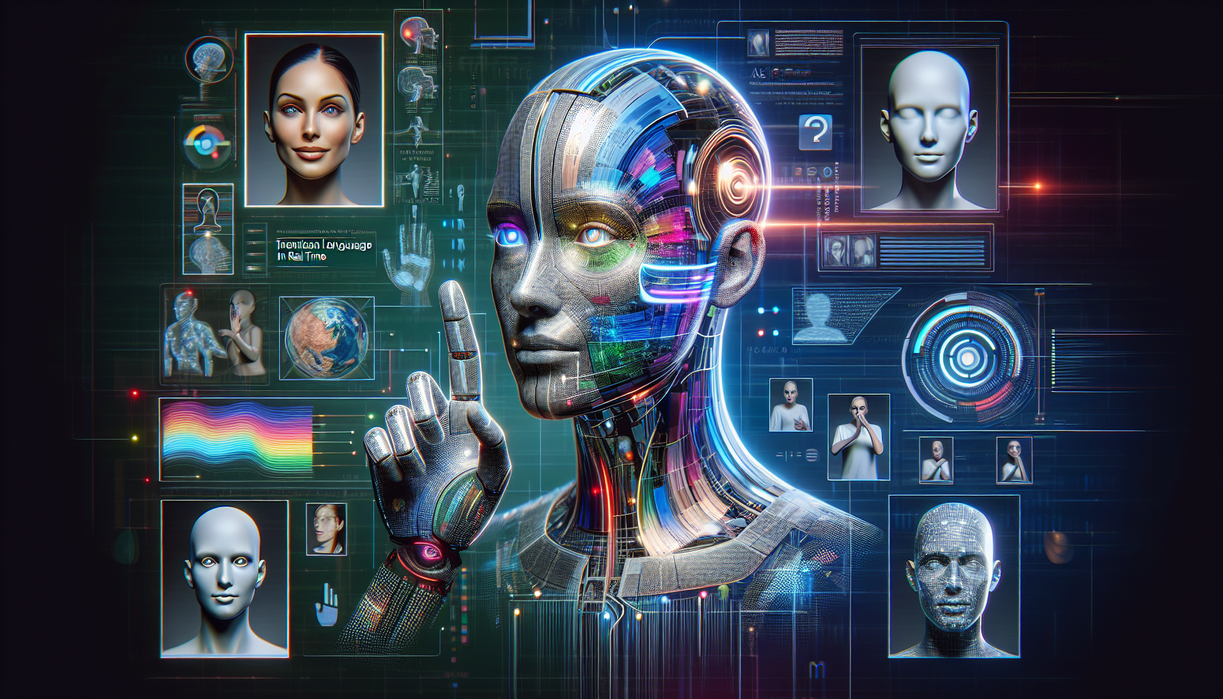
Sorenson’s tools reportedly rely on a digital avatar to present ASL on screen and to interpret input signs into spoken language. According to critics quoted in broader ai news coverage, the avatar fails to reproduce expressive features faithfully. Facial cues look generic, timing seems stiff, and transitions between signs appear robotic. For hearing viewers, this might still look impressive; for fluent signers, it feels off, sometimes even confusing.
When an avatar misrepresents facial grammar, the consequences reach far beyond aesthetics. A yes/no question might resemble a statement. Negation can vanish. Emphasis may disappear, altering the intent of a signer’s message. Imagine trying to understand spoken English with all intonation flattened and punctuation removed. You might grasp basic content, but subtlety, sarcasm, and urgency would vanish. That is essentially what a simplified avatar risks doing to ASL.
My personal concern as I examine this ai news story is not that AI touches sign language at all, but that it might be deployed at scale before reaching a threshold of safety and linguistic integrity. In domains like healthcare, legal services, or emergency response, a mistranslated sign could change outcomes in serious ways. Accessibility technology must meet a higher bar because people depend on it when stakes are high.
Power, Consent, and the Future of Accessible AI
Another layer often overlooked in mainstream ai news is power and consent. Who owns Deaf people’s signing data used to train these tools? Were signers fairly compensated, fully informed, and represented across age, race, region, and signing style? Will organizations use AI interpreters to cut costs, even when quality is lower than human services? My perspective is straightforward: AI should complement interpreters, not replace them. A responsible roadmap would treat Sorenson’s tools as assistive options for low-risk settings, while keeping human professionals at the center of critical communication. That path requires deep partnership with Deaf communities, transparent evaluation of error rates, and legal protections so AI does not become a budget excuse to offer second-rate access. If this ai news moment becomes a turning point toward truly co-designed technology, then the concerns raised today might ultimately guide us toward more ethical, human-centered innovation, instead of a quick fix that leaves Deaf users carrying the risk.