






 0
0
 0
0
www.alliance2k.org – Marietta schools in Oklahoma are stepping into the national spotlight by becoming the first district in the state to install a cutting‑edge active shooter alert system. This bold move reflects a growing urgency across America to rethink how schools respond to violent threats, severe storms, and other fast‑moving crises. For families, educators, and students, the decision raises a pressing question: can smarter technology actually save lives when every second matters?
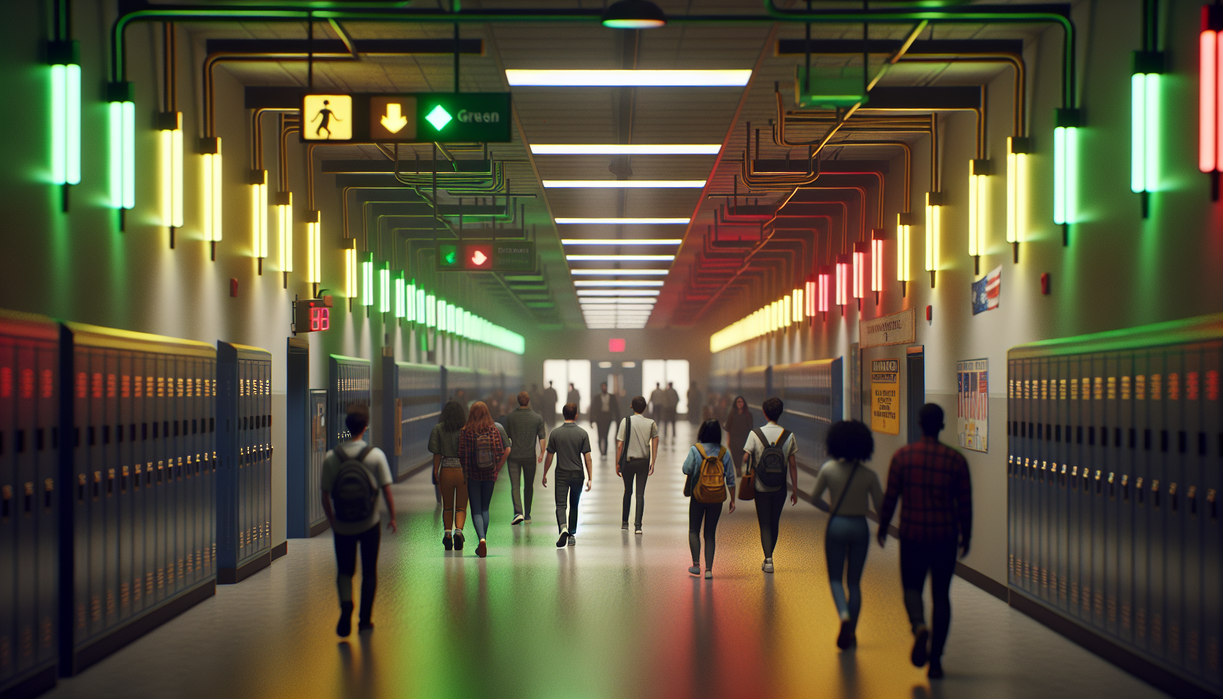
Instead of relying solely on loudspeakers and frantic phone calls, Marietta schools now use a color‑coded lighting system to guide people to safer locations. The technology, called “Go to Green,” promises to reduce confusion by giving clear visual directions inside hallways and classrooms. Its adoption sparks a wider conversation about the balance between security, mental health, cost, and the evolving role of technology in education.
How Marietta schools are changing school safety
At the heart of the new system in Marietta schools is a simple idea: use colors to turn chaos into clarity. When a threat appears on campus, the system can light up corridors with different colors. Green points to a safer route. Red marks danger zones. Other colors can signal lockdowns or shelter‑in‑place instructions. Instead of guessing where to run, students and staff receive guidance in real time, right above their heads.
This matters because traditional lockdown drills often assume people stay put, even when the threat is nearby. With the new approach, Marietta schools acknowledge that emergencies are not static. An active shooter might move through buildings. A tornado path might shift. A dynamic lighting network allows school staff and law enforcement to adapt on the fly, updating directions as new information comes in.
The technology also connects directly with first responders. Police can see a digital map of Marietta schools, track which areas are at risk, and adjust strategies with better situational awareness. Instead of entering a building with limited information, officers can coordinate with administrators who see the same live data. That shared picture can shave off crucial seconds, reduce friendly‑fire risks, and increase the odds of guiding students to the safest spaces.
Beyond headlines: benefits, limits, and human impact
From a safety perspective, Marietta schools are betting that clear visual cues reduce panic. In a high‑stress moment, people rarely think logically. They freeze or follow the crowd. Bright, simple signals cut through that mental fog. A student does not need to process a long announcement. They just follow the green route away from danger or stay put when lights show another status. This simplicity could be the system’s greatest strength.
Yet technology is never a magic shield. Marietta schools still need layered protection: secure entrances, thoughtful visitor management, well‑trained staff, and strong relationships with local authorities. If power fails or a device breaks, the community must fall back on practiced procedures. Emergency plans work only when humans understand them, rehearse them, and trust one another. The new system functions as a powerful tool, not a replacement for human judgment.
There is also the emotional side. Some parents may feel reassured that Marietta schools invest in advanced protection. Others might feel unsettled that such measures are even necessary. For students, daily exposure to safety drills and warning systems can quietly shape how they see school. A place once associated only with learning now carries visible reminders of danger. Leaders in Marietta must keep listening to students, explaining why these steps exist, and ensuring mental health support grows alongside physical security.
A closer look: cost, equity, and the future of safe campuses
The decision by Marietta schools to adopt “Go to Green” raises equity questions across Oklahoma and beyond. Smaller or underfunded districts may view this system as out of reach, even if they face similar risks. If only certain schools can afford advanced tools, communities could see a patchwork of safety levels. Policymakers may need to rethink grants, state support, and public‑private partnerships so that powerful safety innovations do not remain limited to early adopters alone. At the same time, technology vendors must prove these systems are reliable, affordable, and backed by real‑world data, not just marketing language. My view is that Marietta schools are acting as a living test case. Their experience will help other districts ask better questions: Which features truly matter in a crisis? How do students feel about constant visibility of alerts? Do these installations complement or distract from broader goals such as nurturing trust, inclusion, and emotional resilience? The most successful future will likely blend smart infrastructure with human‑centered practices, where safety is not just about escaping danger, but about building communities in which violence becomes far less likely in the first place.